
Mahitungod niining pag-ampo
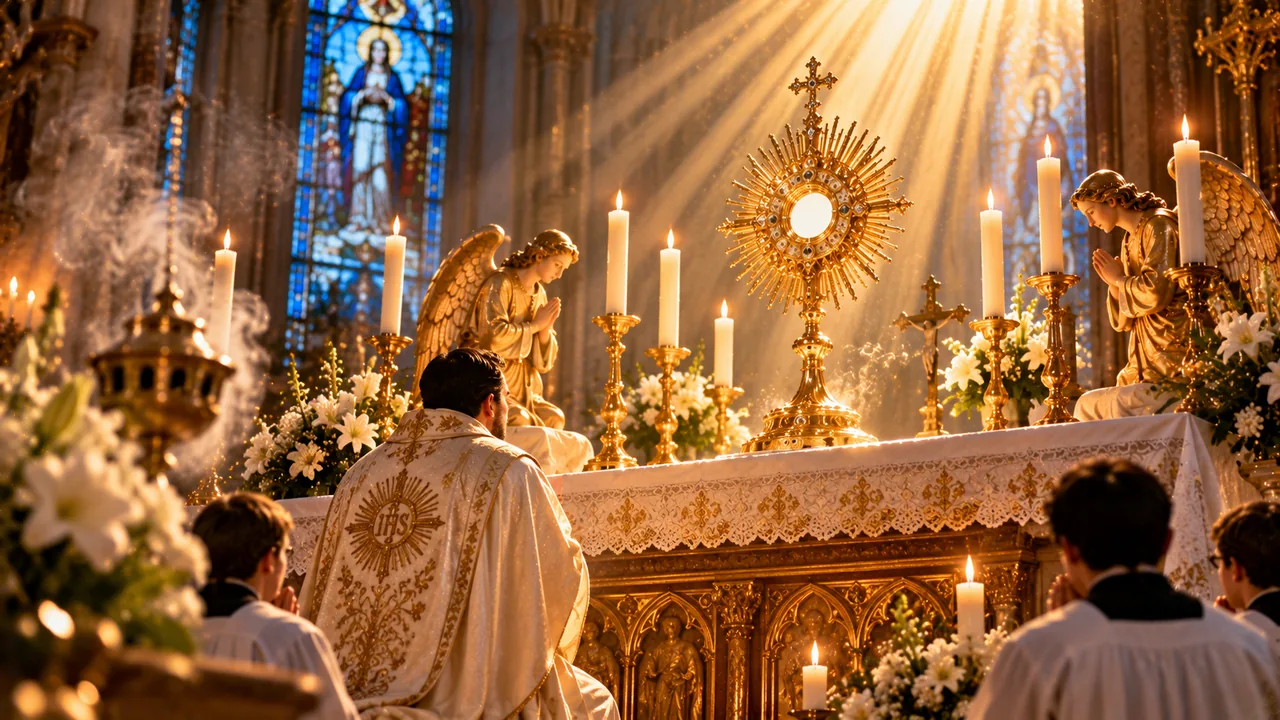
These are the final two stanzas of Saint Thomas Aquinas’s Latin hymn Pange lingua. The Latin hymn and traditional versicle and collect are followed by an original English prose rendering for understanding, not a liturgical translation.
Hibaloa pa: Prayer background & source ↗
Teksto sa pag-ampo
Traditional Latin hymn
Tantum ergo Sacramentum veneremur cernui: et antiquum documentum novo cedat ritui: praestet fides supplementum sensuum defectui.
Genitori, Genitoque laus et jubilatio, salus, honor, virtus quoque sit et benedictio: procedenti ab utroque compar sit laudatio. Amen.
Panem de caelo praestitisti eis.
Omne delectamentum in se habentem.
Oremus.
Deus, qui nobis sub Sacramento mirabili passionis tuae memoriam reliquisti: tribue, quaesumus, ita nos Corporis et Sanguinis tui sacra mysteria venerari, ut redemptionis tuae fructum in nobis jugiter sentiamus. Qui vivis et regnas in saecula saeculorum. Amen.
English meaning · Original prose rendering
Let us bow in worship before this great Sacrament. Let the ancient signs give way to the new rite, and let faith supply what our senses cannot grasp. To the Father and the Son be praise and joy, salvation, honour, power and blessing. To the Spirit who proceeds from both be equal praise. Amen.
You have given them bread from heaven.
Containing every delight.
O God, in this wonderful Sacrament you have left us the memorial of your Passion. Help us to honour the sacred mysteries of your Body and Blood so that we may always experience the fruit of your redemption. You live and reign for ever and ever. Amen.
Pakig-uban sa pag-ampo
Gamita ang kompletong teksto sa ibabaw. Sa hiniusang pag-ampo, usa ang mobasa sa mga bahin sa Pangulo ug ang tanan motubag. Kon nag-inusara, basaha ang duha ka bahin. Paghunong sa makadiyot tali sa mga pag-ampo.
Sugdi ang pag-ampo ↑