
Biag ti pammati
- Dagiti Tawen
- 1813–1853
- Bokasion
- Lay scholar, husband, father and cofounder
- Pananglagip
- Blessed · beatified 22 August 1997
A student challenged to put faith into practice
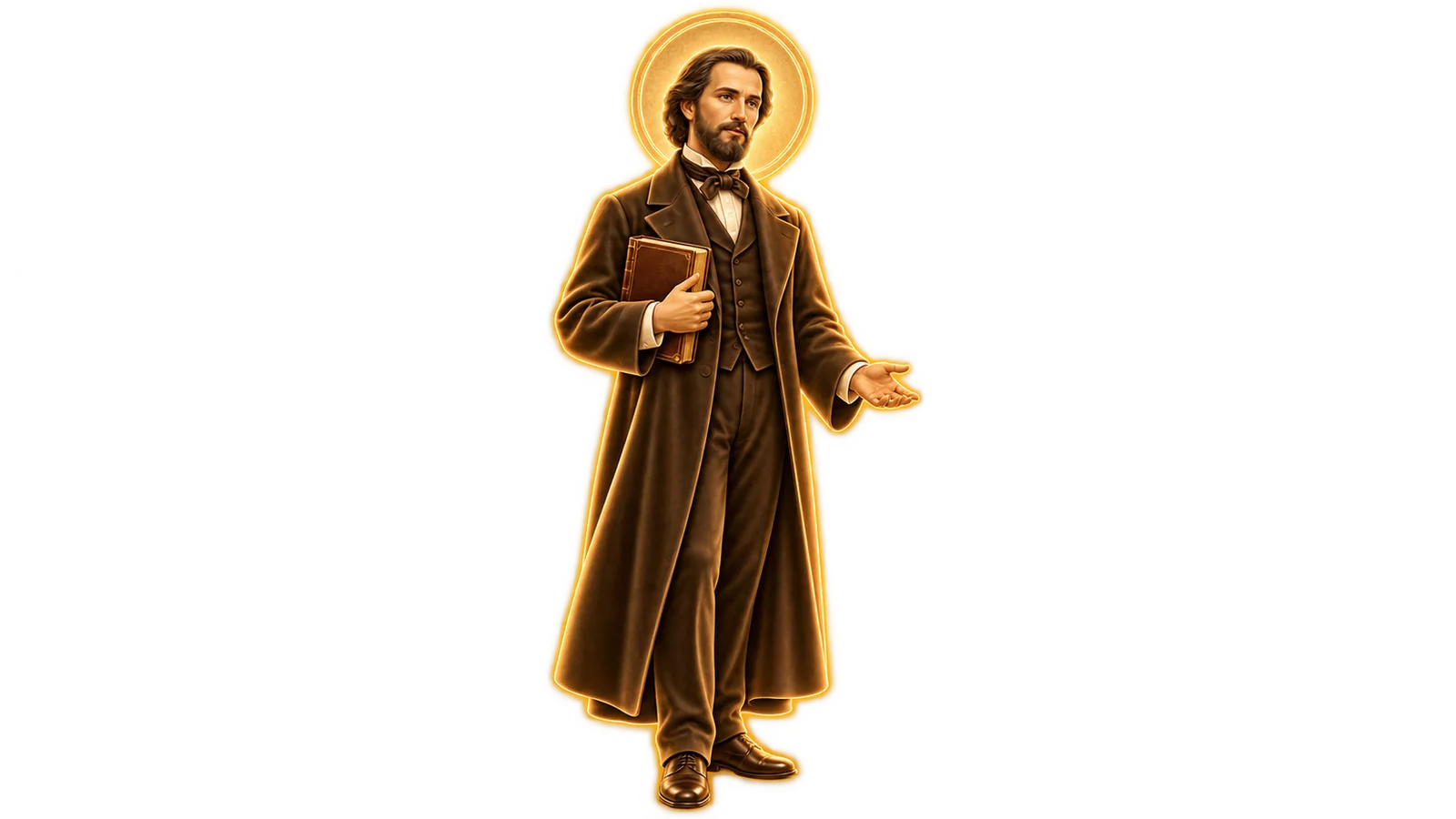
Frédéric Ozanam lived from 1813 to 1853. As a young man studying in Paris, he joined the Conference of History, a setting for intellectual discussion and debate. Challenges to the Church’s relevance raised a searching question: how were Christians responding to the suffering around them? For Ozanam and his companions, defending religious convictions needed to be accompanied by visible service.
Source: Society of St. Vincent de Paul USA · Founding and founders ↗
The beginnings of the Society
In 1833, at the age of twenty, Ozanam joined five other students and their older mentor, Emmanuel Bailly, in founding the charitable association that became the Society of Saint Vincent de Paul. Ozanam was its principal founder, but the beginning was a shared undertaking. Bailly became its first president.
The first members brought their time and resources to people living in poverty. The Society’s account emphasizes the contributions of several founders, including Auguste Le Taillandier, who urged charitable action. Their friendship became a practical framework through which a small group could serve together and sustain its commitment.
Source: Society of St. Vincent de Paul USA · Founding and founders ↗
Learning from Rosalie Rendu
Sister Rosalie Rendu, a Daughter of Charity, guided Ozanam and his companions in their visits to the poor of the Mouffetard district of Paris. This relationship rooted the new Society in the Vincentian tradition. Service involved meeting people personally and recognizing their dignity, rather than treating poverty only as an abstract subject for discussion.
Source: Saint John Paul II · Beatification homily, 22 August 1997 ↗
Scholarship, family life, and social responsibility
Ozanam remained a layman, husband, father, and university teacher. His academic work included teaching in Lyon and at the Sorbonne in Paris. In his beatification homily, John Paul II highlighted his commitment to truth alongside respect for people who held different convictions.
The same homily emphasized Ozanam’s understanding that charity and justice must accompany one another. Immediate assistance mattered, but so did the conditions that kept people in poverty. His example connects personal generosity with responsibility for the wider life of society.
Source: Saint John Paul II · Beatification homily, 22 August 1997 ↗
A short life with a continuing influence
Ozanam died in 1853, aged forty. Pope John Paul II beatified him at Notre-Dame de Paris on 22 August 1997. He is therefore presented here as Blessed Frédéric Ozanam. The Society that he helped establish continues his call to make Christian faith visible through service.
Source: Saint John Paul II · Beatification homily, 22 August 1997 ↗
Living his example today
For reflection: choose a concern you often discuss and identify one useful action you can take with others. Learn from people already serving in that field, and listen to those directly affected. Ozanam’s story can encourage students, professionals, and families to see their ordinary relationships and abilities as opportunities for responsible service.
Kitaen ti pakasaritaan
Blessed Frédéric Ozanam
From the Prayers and Reflections YouTube channel.
Kitaen iti YouTube ↗