
Biag ti pammati
- Dagiti Tawen
- 1581–1660
- Bokasion
- Priest and founder
- Pananglagip
- 27 September
From rural France to the priesthood
Vincent de Paul was born in 1581 at Pouy, near Dax in southwestern France, into a farming family. Education offered him opportunities beyond rural life, and he was ordained in 1600. His early hopes included financial security for himself and his family. His vocation developed gradually through pastoral work, spiritual guidance, and encounters with people whose suffering challenged those ambitions.
Serving at Clichy and later in the household of the influential de Gondi family brought him into contact with very different social worlds. He came to recognize both the material hardship of poor families and their need for spiritual care. His experience with galley prisoners also exposed him to degrading conditions that demanded a response.
1617: two encounters that shaped a mission
At Folleville in January 1617, a sermon following his ministry to a dying peasant prompted many people to seek confession. Vincent saw an urgent need for sustained evangelization in rural communities. Later that year, at Châtillon, his appeal for a sick family brought generous assistance. It also revealed a practical problem: help needed coordination if it was to continue after the first response. The Confraternities of Charity gave that generosity an organized form.
Building communities of service
In 1625, Vincent founded the Congregation of the Mission. Its work linked rural missions with the formation of priests. In 1633, he and Louise de Marillac founded the Daughters of Charity. Their collaboration extended care to sick people, abandoned children, and communities harmed by war. Vincent also promoted retreats, conferences, and seminaries: lasting service required people prepared both spiritually and practically.
Death and enduring legacy
Vincent died in Paris on 27 September 1660 and was canonized by Pope Clement XII in 1737. His feast is celebrated on 27 September. The communities associated with his work continue to connect Christian prayer with service to people in need.
Living his example today
For reflection: a compassionate impulse becomes more helpful when someone follows through. Vincent’s life invites us to ask who will make the next visit, arrange the transport, or ensure that assistance continues. Begin with one person’s actual needs, listen before deciding what to offer, and find others willing to share the responsibility. Organization can become an expression of love when it protects a person’s dignity.
Kitaen ti pakasaritaan
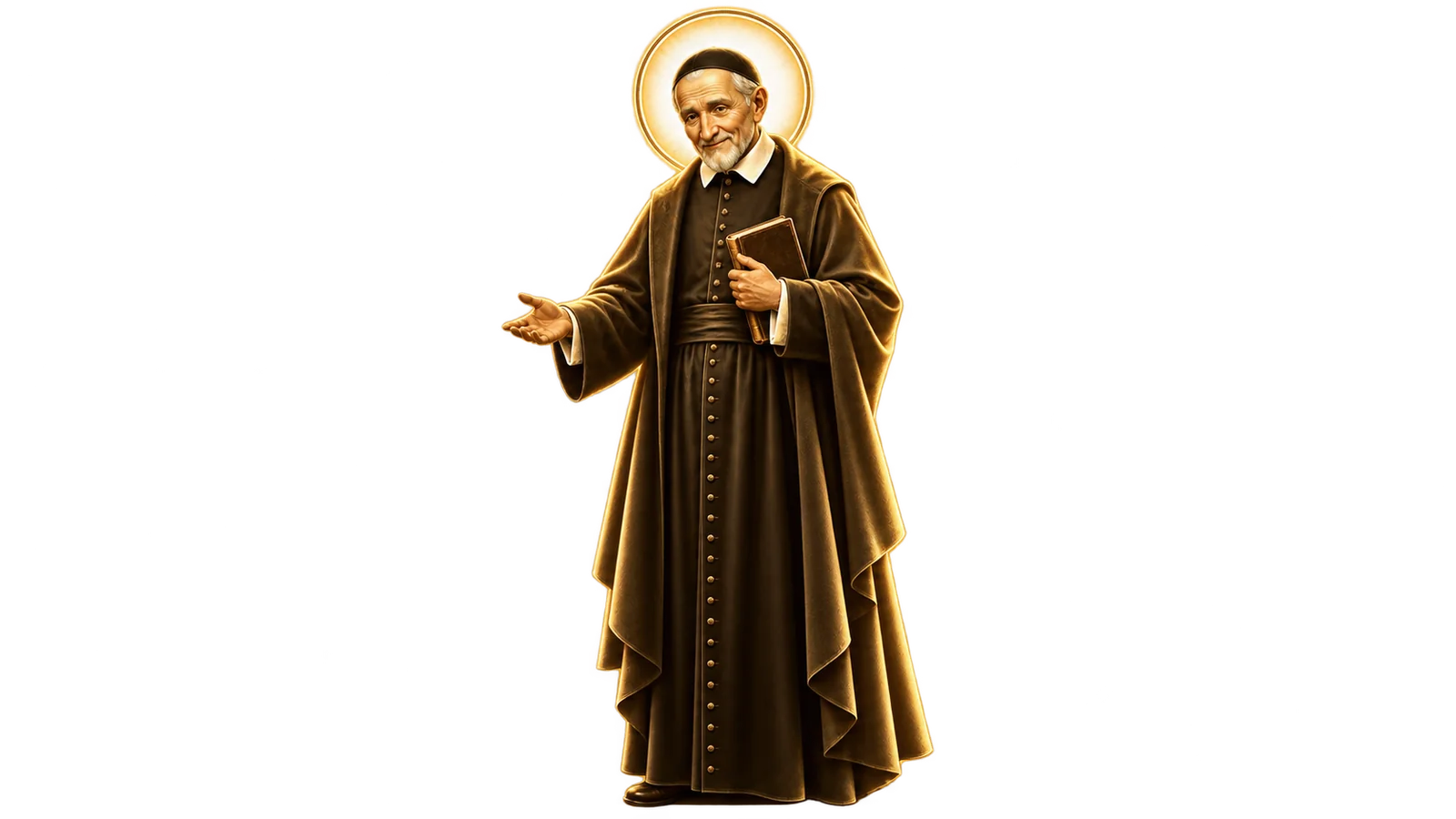
Saint Vincent de Paul
From the Prayers and Reflections YouTube channel.
Kitaen iti YouTube ↗Pray with Saint Vincent
Continue with nine days of Scripture, reflection and community prayer.
Explore the novena →